
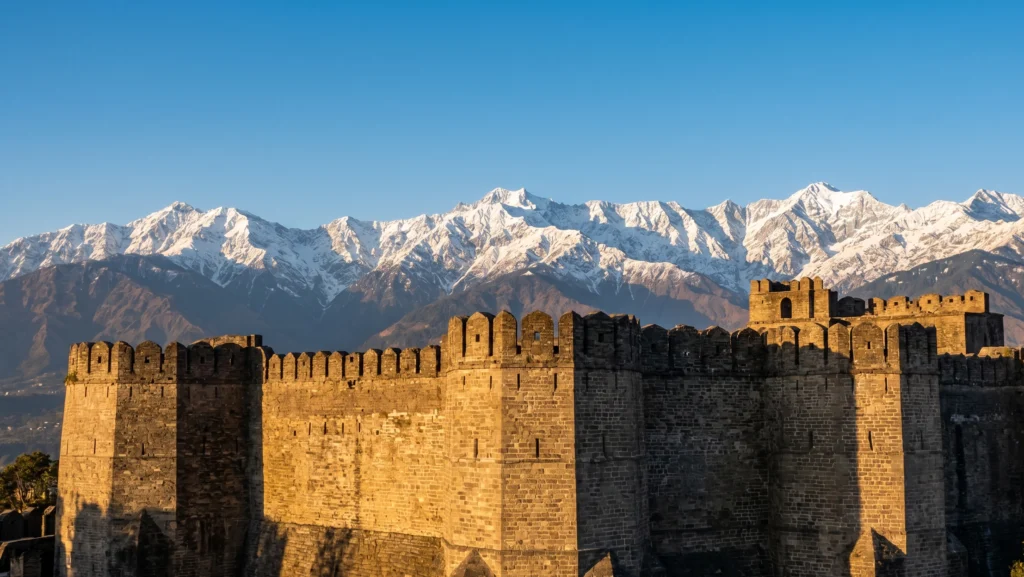
In the heart of the Himalayas, an ancient proverb still echoes through the misty valleys: ‘He who holds the Kangra Fort, holds the hills.’ This isn’t merely a local legend; it is a testament to the strategic and spiritual dominance of a fortress that has defied time itself. Perched majestically at the sharp confluence of the Banganga and Manjhi rivers, this big stone sentinel has watched over Himachal for over three and a half millennia. Known as Nagarkot, it represents more than just a monument of the past—it is a 3,500-year-old survivor of almost 50+ recorded invasions. Covering a sprawling area that makes it the largest fort in the entire Himalayan range and the 8th largest in all of India, its sheer scale is a silent witness to the vanished glory of the Trigarta Kingdom.
Kangra Fort: Secrets of the Oldest Fort in the Himalayas
Kangra Fort is famous as the oldest dated fort in India and the largest in the Himalayas. Spanning 463 acres, it was built 3,500 years ago by the Katoch Dynasty. It is special for surviving 52 invasions and housing the legendary 21 treasure wells and the Brajeshwari Temple Shakti Peeth.
The Strategic Enigma of Nagarkot
You are searching for the soul of Himachal’s history, but most travel guides offer only surface-level dates. You want to understand why every major empire—from the Mughals to the British—was obsessed with this single mountain citadel.
The struggle is finding accurate, deep-dive information that isn’t just “fluff.” Without understanding the Katoch lineage and the fort’s topographical advantage, you’re just looking at ruins.
This guide provides the 1% perspective: the tactical, spiritual, and historical secrets of Nagarkot, the ancient name of Kangra, ensuring your next visit or research project is grounded in absolute authority.
What is special about Kangra Fort?
The fort’s uniqueness lies in its impenetrability and antiquity. While many Indian forts date back to the medieval era, Kangra Fort (or Nagarkot) traces its origins to the Mahabharata era.
Key Technical Specifications:
- Total Gates: 7 massive “Darwazas” designed for elephant-proof defense.
- Strategic Confluence: Situated at the meeting point of the Banganga and Manjhi rivers.
- Altitude: Perched on a steep cliff, making it the highest fort in the Himalayas of its scale.
- The Treasure Factor: It historically housed 21 deep wells filled with gold and silver ornaments.
Who built Kangra Fort and how old is it?
The fort was built by Maharaja Susharma Chandra of the Katoch Dynasty. Historical records and local genealogy suggest the fort is approximately 3,500 years old.
Susharma Chandra was a contemporary of the Kauravas and moved his capital from Jalandhar to this hilly terrain after the Great War. This makes the Katoch Dynasty one of the oldest surviving royal lineages in the world today.
Pro Tip: When visiting, look for the Jahangiri Darwaza. It marks the 14-month siege by the Mughals in 1620, a rare moment when the fort’s natural defenses were finally breached through starvation tactics rather than direct combat.
The Sacred Connection: Which part of Mata Sati fell in Kangra?
For spiritual seekers, Kangra Fort is more than a military structure; it is a Shakti Peeth. According to the Puranas, when Lord Vishnu used the Sudarshana Chakra on the body of Mata Sati, her left breast fell at this exact location.
This led to the creation of the Bajreshwari Devi Temple. Originally, the most sacred shrine was located inside the fort walls. Invaders like Mahmud Ghazni targeted the fort specifically to loot the immense gold offerings dedicated to the Goddess. Today, the main temple is in Kangra town, but the fort remains a site of deep pilgrimage.
Exploring the History of Kangra Fort: A Timeline of Valor
| Era | Event/King | Significance |
| Ancient | Susharma Chandra | Founder of the Trigarta Kingdom and the Fort. |
| 1009 AD | Mahmud Ghazni | Looted the 21 treasure wells; took 700,000 gold dinars. |
| 1620 AD | Emperor Jahangir | First Mughal to capture the fort after 14 months. |
| 1789 AD | Raja Sansar Chand | Reclaimed the fort; started the Golden Age of Kangra. |
| 1846 AD | British Empire | Took control after the First Anglo-Sikh War. |
| 1905 AD | Great Earthquake | Devastated the palace structures and temples. |
What was the Golden Age of Kangra?
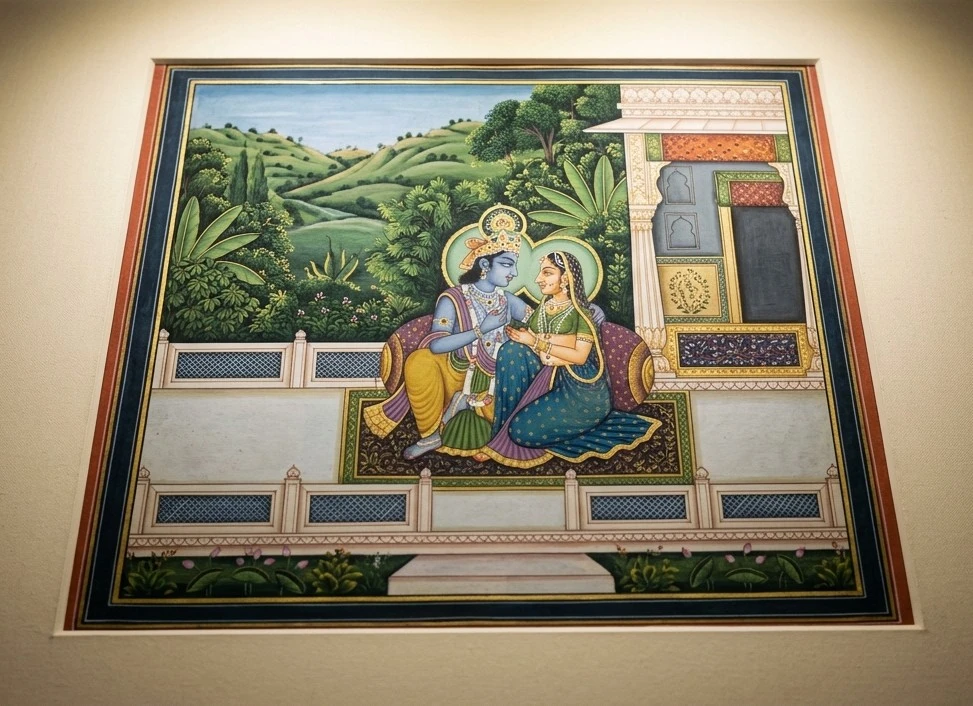
The Golden Age occurred under the reign of Raja Sansar Chand II. Under his patronage, Kangra became the cultural capital of the hills. This era saw the birth of the Kangra School of Miniature Paintings, which is now globally recognized.
He transformed the fort from a purely military barracks into a center of art and literature. However, his ambition eventually led to a conflict with the Gurkhas, leading to the last king of Kangra Fort, Raja Anirudh Chand, eventually losing sovereign control to the Sikhs and then the British.
Practical Visitor Intelligence: Timings and Location
To explore Kangra Fort efficiently in 2026, precision is key.
- Location: 20 KM from Dharamshala; 3 KM from Kangra Bypass.
- Timings: 9:00 AM to 5:30 PM (Daily).
- Audio Guide: Mandatory for the 1% traveler. It is narrated by the current Katoch Royal family.
- Best Time: October to March. The air is crisp, and the Dhauladhar range is visible in high definition from the Pol (watchtower).
Expert Insights for the Travellers
- The Hidden Wells: While 13 wells were looted by Ghazni and the British, legend says 8 wells remain hidden within the fort’s inner sanctum, their locations lost to time.
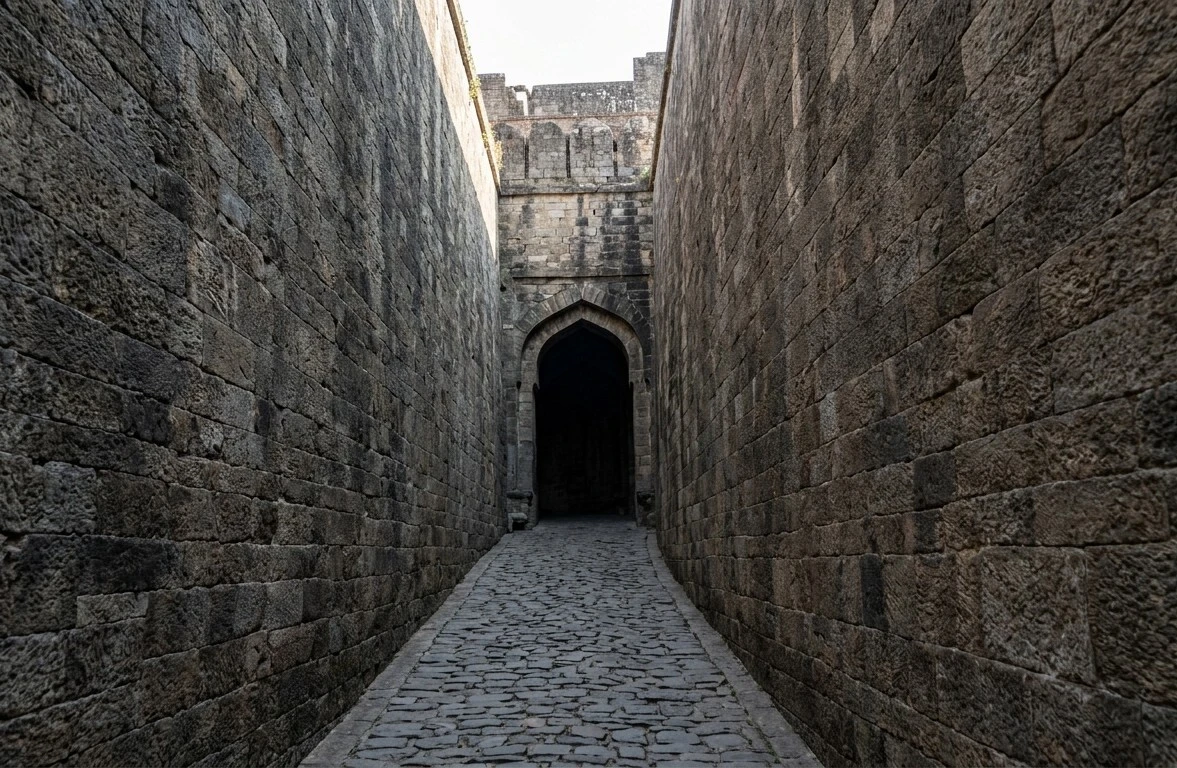
- Acoustic Defense: Notice the narrow, winding path between the Ahani and Amiri gates. It was designed to amplify the sound of approaching hoofbeats, giving the guards an early warning.
- Photography Tip: The “Golden Hour” (sunset) at the Ambika Devi Temple inside the fort offers the best lighting for architectural photography without the midday glare.
Why you must visit Nagarkot
Kangra Fort is not just a heap of stones; it is the oldest fort in the Himalayas and a testament to Indian resilience. From its Mahabharata roots to its role in the 2026 Himachal Heritage Circuit, it remains the ultimate destination for those who value history, mystery, and military genius.
Key Takeaways:
- Identity: It is the oldest fort in India with a documented lineage.
- Military: It survived 52 invasions before the 1905 earthquake did what no army could.
- Spiritual: It is a verified Shakti Peeth related to Mata Sati.
- Dynasty: The Katoch Dynasty founded it and still preserves its history.